
Stop Losing Omaha Customers To Competitors On Google Maps
Putting Omaha’s Best Businesses on the Map.
We put hardworking Omaha businesses at the top of local search results. No vanity metrics or confusing agency talk. Just a proven system to make your phone ring and keep your storefront busy.

Midwestern Grit Meets Digital Precision in Omaha
My name is Ashley Chase. During my time working with Girls Inc. of Omaha, I learned exactly what it takes to build up our local community: hard work, straight talk, and showing up every single day. I brought that exact same Midwestern grit into the SEO world because I saw too many incredible Omaha businesses getting buried online by out-of-state competitors.
We do not operate like a typical digital marketing agency. You will not find us talking about impressions or brand awareness in our monthly reports. If you run a plumbing outfit in Millard or a cafe in the Old Market, you cannot pay your technicians or your baristas with impressions. You pay them with revenue from ringing phones and foot traffic.
That is why we focus strictly on Google Maps optimization and local search visibility for Omaha businesses. When a homeowner in West Omaha searches for emergency HVAC repair, or a family in Dundee looks for a restaurant near me, your business needs to be in the top three map results. If you are not in the Google Local Pack, you are handing money directly to the guy down the street.
We fix that. We audit your current citations, clean up your Google Business Profile, and build hyper-local relevance so Google trusts your business above the rest. We put Omaha’s best businesses on the map, plain and simple.
Omaha Local Search Services That Drive Revenue
📍 Google Business Profile Optimization
Claim, verify, and fully build out your GBP with correct NAP data, categories, and attributes to dominate the Local Pack.
📋 Local Citation Building
We audit and fix your business listings across 50+ local directories like Yelp, BBB, and the Omaha Chamber of Commerce to build trust with Google.
⭐ Review Generation Systems
Automate your review requests to consistently gather 5-star ratings from real Omaha customers, pushing you past competitors with stagnant reviews.
💻 Hyper-Local On-Page SEO
We structure your website headers, meta tags, and service area pages to explicitly target Omaha neighborhoods from Benson to Elkhorn.
🔗 Local Link Building
Earn backlinks from other trusted Omaha businesses, local news outlets, and Nebraska community organizations to build regional authority.
🛡️ Spam Fighting & Competitor Reporting
We actively report fake competitor listings and keyword-stuffed profiles in the Omaha area to clear the path for your legitimate business.
Real Omaha Businesses. Real Foot Traffic.
Residential Plumber, Millard
Before: Stuck on page 3 of Google Maps for water heater repair Omaha.
After: Secured the #2 spot in the Local Pack, generating 42 inbound calls per month.
⏱ 120 days
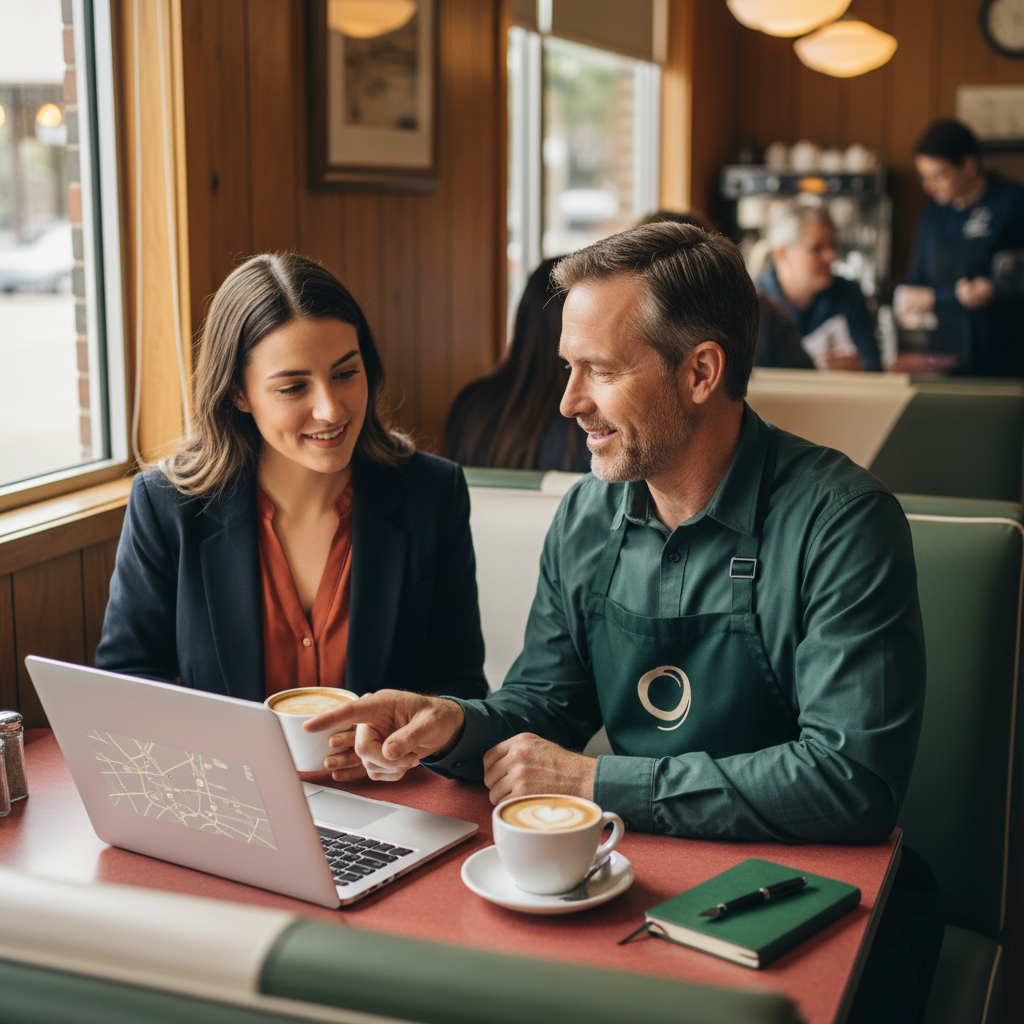
Independent Cafe, Old Market
Before: Missing from coffee shop near me searches despite being open for 4 years.
After: Increased driving direction requests by 115% and doubled weekend foot traffic.
⏱ 90 days
Roofing Contractor, West Omaha
Before: Relying entirely on expensive Pay-Per-Click ads and buying shared leads.
After: Replaced paid ads with organic map rankings, booking 14 exclusive roof inspections monthly.
⏱ 6 months
How We Dominate Omaha Local Search
1
Audit Your Current Local Footprint
We analyze your Google Business Profile, website structure, and existing citations. You get a clear, 15-point breakdown showing exactly why Omaha competitors are outranking you.
2
Optimize and Build Authority
We rewrite your local content, fix broken directory listings, and upload geotagged photos of your recent Omaha jobs. We handle the technical heavy lifting while you run your business.
3
Track Calls and Measure Growth
We install call tracking numbers and monitor driving direction requests. Every 30 days, you receive a straightforward report showing exactly how many new customers found you on Maps.
Frequently Asked Questions
How long does it take to get into the Google Maps top 3 in Omaha?
It takes 90 to 120 days for most local service businesses to see significant movement. If your industry is highly competitive, like personal injury law or HVAC, expect a 6-month timeline to secure and hold a top spot.
Do I need a physical storefront to rank on Google Maps?
No. Service Area Businesses like mobile detailers or plumbers rank highly by hiding their residential address and setting a specific Omaha service radius. We optimize your profile to ensure Google recognizes your local authority without exposing your home address.
Why is my competitor ranking higher when they have fewer reviews?
Review count is only one ranking factor. Your competitor likely has better local citations, a more optimized primary category, or stronger hyper-local backlinks from other Omaha websites. We identify their exact advantage and beat it.
What happens if my Google Business Profile gets suspended?
We handle the entire reinstatement process. We gather your Nebraska LLC paperwork, utility bills, and storefront photos, then submit the exact documentation Google requires to get your profile live again within 7 to 14 days.
Stop Handing Omaha Customers to Your Competitors
Every day you ignore your Google Maps ranking, local buyers are calling the business listed above you. Let’s fix your local visibility and get your phone ringing.
Written & Reviewed By
Ashley Chase
Girls Inc. of Omaha
Ashley Chase is a dedicated professional based in Omaha, Nebraska, with a deep-rooted commitment to the local community. With her extensive background working with organizations like Girls Inc. of Omaha, Ashley brings a unique perspective to the digital marketing landscape, specifically focusing on how local businesses and non-profits can leverage their online presence to drive real-world impact. Her experience in the Omaha area allows her to understand the nuances of the local market, making her an authoritative voice for omahalocalseo.com. Ashley specializes in bridging the gap between community engagement and digital visibility, ensuring that local entities are not just seen, but truly connected with their target audience. Over the years, she has developed a keen eye for the strategies that help Omaha-based organizations thrive in an increasingly competitive digital environment. By combining her professional expertise with her intimate knowledge of the Nebraska business climate, she provides invaluable insights into local search optimization and brand building. Ashley is deeply passionate about empowering others to achieve their goals through strategic communication and sustainable growth.
Latest from Our Blog
Why Your Omaha Business Profile Support Request Keeps Getting Rejected
Why Your Omaha Business Profile Support Request Keeps Getting Rejected There is nothing quite as gut-wrenching for a local business…
Local SEO Trends 2026: Why Hyper-Specific Proximity is the New Priority
Local SEO Trends 2026: Why Hyper-Specific Proximity is the New Priority Local SEO Trends 2026: Why Hyper-Specific Proximity is the…
5 Quiet Ranking Signals Omaha Competitors Are Ignoring
5 Quiet Ranking Signals Omaha Competitors Are Ignoring: The Future of Google Business Profile SEO 5 Quiet Ranking Signals Omaha…