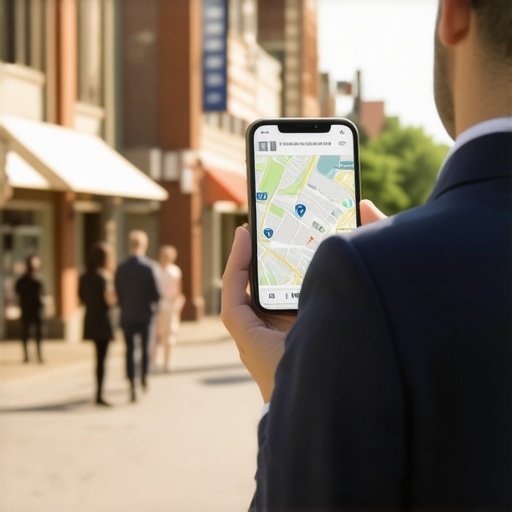
Ever felt that sinking frustration when your Omaha business isn’t showing up on Google Maps the way you’d hoped? I’ve been there. I remember launching my first local campaign, only to realize my Google My Business listing was buried beneath competitors who seemed to have cracked the code. That moment of realization hit hard—what was I missing? Turns out, it was all about the right strategies, not just listing your business and hoping for the best.
Why Local Maps Matter More Than Ever for Nebraska Businesses
In the heart of Omaha, where competition is fierce and customer attention is fleeting, your visibility on Google Maps can make or break your local success. According to a recent study by Google, 78% of local mobile searches lead to offline purchases within a day. That’s a huge chunk of potential customers just waiting to find you—if they can see you first. But here’s the catch: many local businesses are unknowingly sabotaging their own efforts with simple mistakes or outdated tactics.
Have You Faced This Frustration of Invisible Listings?
If you’ve ever wondered why your Omaha storefront isn’t pulling in more foot traffic despite having a solid website, you’re not alone. I made that mistake early on—focusing solely on SEO for my website and ignoring Google Maps. Big mistake. I learned the hard way that neglecting local map optimization can leave your business in the shadows. To truly thrive, you need to master proven local maps strategies, and that’s exactly what I’ll guide you through today.
Ready to turn your Google Maps listing into a customer magnet? Keep reading, because the next section will unveil the most effective tactics to boost your Omaha business’s visibility and attract local customers like never before.
Secure Your Google My Business Listing
The first step I took was claiming and verifying my Google My Business (GMB) listing. Think of it as locking the front door to your digital storefront. To do this effectively, ensure your business details are accurate, consistent, and complete. I remember initially entering my address slightly off, which caused my listing to be misaligned on maps. Once I corrected this, my visibility improved significantly. For detailed tips on optimizing your GMB profile, check out this guide.
Optimize Your Business Information
Precision matters. Make sure your business name, address, and phone number (NAP) are consistent across all online platforms. I once found a discrepancy between my website and GMB listing that was hurting my rankings. Correcting this was like aligning the gears in a machine—everything ran smoother afterward. Use relevant keywords naturally in your business description to signal relevance to local searches. Want to dive deeper? Visit this resource.
Leverage Local Keywords Effectively
Imagine your keywords as breadcrumbs guiding customers directly to your door. I incorporated geo-specific keywords into my business categories and service descriptions, which acted like a beacon for nearby customers. For example, instead of just “bakery,” I used “Omaha artisan bakery.” This specific targeting made a real difference. Use tools like Google Keyword Planner to identify high-traffic local terms. For more strategies, see this guide.
Regularly Post Updates and Offers
Think of your GMB posts as daily signs in your window—keeping your business fresh in the eyes of both Google and customers. I started posting weekly updates about new products and special events. It was messy at first, with inconsistent messaging, but over time, Google rewarded my efforts with higher rankings. Use high-quality images and clear calls-to-action to maximize engagement. For tips on creating compelling posts, check this resource.
Gather and Respond to Customer Reviews
Reviews are like digital word-of-mouth. I actively encouraged satisfied customers to leave reviews and responded promptly. This not only improved my ratings but also showed Google that my business was active and trustworthy. Remember, respond professionally—even to negative reviews. This engagement signals your commitment to customer service. Want to learn how to get more reviews? Explore this detailed guide.
Use High-Quality Photos to Showcase Your Business
Photos are your virtual storefront window. I invested in professional images that highlight my products and ambiance. This visual content helped my listing stand out and attracted more clicks. Ensure your images are well-lit, relevant, and up-to-date. Google favors active, engaging profiles. For comprehensive advice on visuals, visit this article.
Maintain Consistency and Monitor Your Progress
Consistency in your updates and information keeps your profile trustworthy. I set monthly reminders to review my GMB profile and update any outdated info. Use analytics tools to track your visibility and adjust your strategies accordingly. Monitoring your progress is like tuning a guitar—you need to keep it in harmony for optimal performance. For ongoing tips, consult this resource.
Many local business owners in Omaha and across Nebraska operate under assumptions about Google Maps optimization that can actually hinder their progress. Let’s dig deeper into some of these misconceptions and reveal the hidden nuances that can make or break your local SEO efforts.
Why Do Most People Overlook the Power of Consistency?
One frequent mistake is believing that a one-time setup of your Google My Business (GMB) profile is enough. In reality, maintaining and updating your profile regularly is crucial. Google favors active listings that reflect current information, special offers, and fresh photos. Neglecting consistency can cause your ranking to drop, despite initial optimizations. For advanced insights, check this detailed guide.
Don’t Fall for the Myth of Perfect NAP Accuracy
Many believe that having their Name, Address, and Phone number (NAP) perfectly aligned everywhere is enough. While consistency is vital, it’s equally important to understand that slight variations or errors in different directories can sometimes help in local SEO if managed correctly. The key is to avoid blatant discrepancies that confuse both customers and Google. An advanced mistake is over-optimizing your NAP with keywords, which can trigger penalties—balance is essential. For nuanced strategies, see this resource.
Advanced Question: How Do Google’s Local Algorithms Interpret Mixed Signals?
Google’s local search algorithms are complex and continuously evolving, often interpreting signals from reviews, citations, and engagement metrics in nuanced ways. Many believe that simply increasing reviews or citations will automatically boost rankings. In reality, Google evaluates the quality, relevance, and consistency of these signals. For instance, a high volume of negative reviews or inconsistent citation data can harm your visibility. A recent study by Moz highlights how the quality of local signals impacts rankings more than sheer quantity. To master this, consider a holistic approach, combining review management, citation accuracy, and engagement strategies, as discussed in this in-depth article.
Have you ever fallen into this trap? Let me know in the comments. Understanding these hidden nuances can elevate your Omaha business above the competition and ensure you leverage Google Maps as a powerful growth tool.
Keeping your Omaha business visible on Google Maps is an ongoing process that requires the right tools and strategies to ensure long-term success. As the local SEO landscape evolves, so should your approach. In this guide, I’ll share the precise tools and methods I personally rely on to maintain and improve my local maps presence over time, helping you stay ahead of the competition.
Which Tools Help Me Keep Google Maps Working Smoothly
One of my favorite tools is BrightLocal. I use it daily to monitor my local citations, review profiles, and track keyword rankings. BrightLocal’s local search audit feature provides a comprehensive overview of my listing health, alerting me to inconsistencies or negative reviews that need attention. Its review tracking system is especially valuable—I receive notifications whenever new reviews are posted, allowing me to respond promptly and reinforce customer engagement.
Another indispensable tool is Moz Local. I utilize Moz Local to ensure my NAP (Name, Address, Phone number) data remains consistent across all directories. This consistency is vital for Google’s trust signals. Moz’s dashboard gives me a clear picture of citation accuracy and highlights any problematic listings that could hurt my rankings. This proactive approach prevents small issues from snowballing into significant visibility drops.
For managing my Google My Business (GMB) profile directly, I rely on the GMB App. It allows me to post updates, respond to reviews, and analyze insights on the go. I recommend local business owners get familiar with its features—regular posting and review responses have proven to be key factors in maintaining high visibility.
How Do I Maintain GMB Effectively Over Time?
Consistency is king. I set weekly reminders to review my GMB profile for outdated information, new reviews, or fresh photos. Regular activity signals to Google that my listing is active and trustworthy, which positively impacts my local rankings. Additionally, I keep an eye on insights provided by the GMB dashboard—tracking how customers find my listing, what actions they take, and where improvements are needed.
Looking ahead, I predict that automation and AI-based review monitoring will become even more prevalent. Tools like ReviewTrackers are already integrating AI to analyze review sentiment and flag potential issues before they escalate. Staying updated with these advancements will be crucial for ongoing success.
Don’t forget to leverage these tools to automate routine tasks and focus your energy on strategic growth. For instance, I recommend trying out BrightLocal’s audit features to regularly check citation health and review consistency. This simple step can prevent many issues before they impact your visibility.
Remember, maintaining your Google Maps presence isn’t a one-and-done task. It’s a continuous effort—one that pays off with sustained local visibility and increased foot traffic. Take control today by integrating these tools into your routine and watch your Omaha business thrive online.
The Hardest Lesson I Learned About Local Maps Optimization
Early in my journey, I believed that once my Google My Business profile was set up, my Omaha business would automatically rank higher. It took months of neglecting regular updates and engagement before I realized that consistency is king. This taught me that local SEO is less a one-time task and more a continuous effort—small, regular actions compound over time to create significant visibility gains.
3 Myths About Google Maps Optimization That Held Me Back
I used to think that NAP consistency was all that mattered. Then I learned that a balanced approach—pairing accurate data with high-quality reviews, engaging posts, and strategic keywords—delivers superior results. Over-optimizing or obsessing over perfection can actually harm your rankings, so understanding the nuances has been a game-changer for my Omaha business.
What Experts Won’t Tell You About Local SEO Growth
One lightbulb moment was realizing that Google’s algorithms interpret mixed signals from reviews, citations, and engagement in complex ways. You might have plenty of reviews, but if they’re negative or spammy, your visibility suffers. The key is to focus on quality, relevance, and genuine customer interactions—something that often gets overlooked in quick-fix strategies.




 >
>