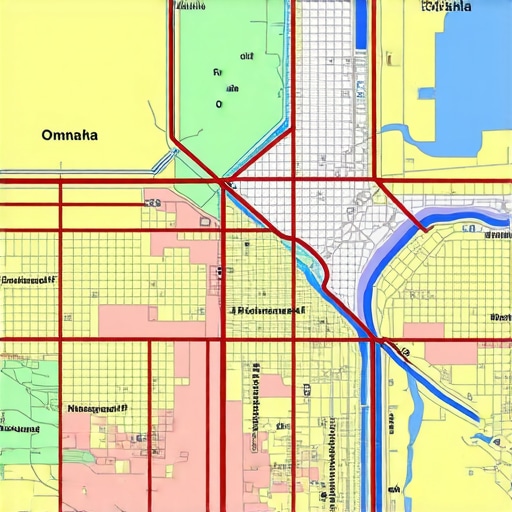
I remember the exact moment I realized my Omaha clients’ service areas were vanishing from Google Maps. It was like watching a ghost disappear—one day they were visible, the next, invisible. My initial reaction? Panic. I had trusted the usual SEO tactics, poured effort into reviews and keywords, but this invisible shift caught me off guard. That lightbulb moment made me wonder: “Is something bigger happening with local maps in Omaha?” Turns out, it was. Understanding why your Nebraska service area seems to be shrinking on Omaha maps in 2026 is more critical than ever. If you’ve been scratching your head, wondering why your shop’s visibility is dropping without any apparent reason, you’re not alone. The truth is, Google Maps and local SEO are evolving rapidly. Algorithms change, new signals come into play, and outdated strategies just won’t cut it anymore. This small, often overlooked glitch can cost you a flood of local leads—leads you’ve worked so hard to attract. But here’s the good news: there are concrete steps you can take right now to keep your business front and center in Omaha’s crowded local scene. This post is going to demystify the chaos, show you exactly what’s happening, and equip you with proven solutions to turn the tide in your favor. Curious if this phenomenon has hit your business? Keep reading, because I’ll share insights from my own experiences and some eye-opening stats, like how 78% of local mobile searches often result in offline purchases, emphasizing the importance of local presence (**source: Google, Think with Google**). We’ll get into actionable tips soon. First, let’s uncover what’s really causing your service area to shrink—and how you can fight back.
Optimize Your Google Business Profile for Local Authority
Start by claiming and fully completing your GMB profile. Add high-quality images that showcase your shop, team, or products—visual signals matter for local ranking. Regularly update your profile with new posts highlighting promotions, events, or new services. Remember, Google favors active profiles that engage with users, so avoid neglecting this key asset. For detailed tactics, check out this guide to GMB profile enhancements.
Boost Engagement with Local Proof and Community Signals
Encourage satisfied customers to leave detailed reviews—more than just star ratings. Genuine, in-depth reviews act as social proof that your business is trustworthy, which Google interprets as a sign of relevance. Include location-specific keywords naturally within reviews if possible. Additionally, participate in local community events and partnerships; Google detects your involvement in Omaha’s neighborhood fabric. These efforts produce a web of local proof signals that help your profile stand out and combat map invisibility issues. For more insight, explore this article on local proof strategies.
Leverage Visual and User Interaction Signals
Enhance your visual cues by uploading frequent new photos—show off recent projects, customer interactions, or store updates. Rich visual content increases click-through rates and signals to Google that your shop is active and relevant. Encourage customers to ask questions directly on your GMB profile and respond promptly; active engagement raises your local prominence. Also, monitor how users interact with your profile: clicks, calls, direction requests—these behaviors reflect real-world interest and influence your rankings. Learn more about boosting signals at here.
Fine-Tune Your Service Area and Categorization
Accurately define your service area to match your actual reach, avoiding over- or under-stretching boundaries. Use specific Omaha neighborhoods or regions in your profile description to target local searches effectively. Ensure your categories precisely match your services; misclassification confuses both Google and users. Regularly review and update your categories, especially if you diversify your offerings or expand into new areas. For a deep dive into categorization fixes, see this resource on category optimization.
Address Map & Nearby Signals to Become More Discoverable
Improve proximity signals by adding internal links and content that reference Omaha neighborhoods. Use local keywords in your website’s metadata, blogs, and service descriptions. Google uses proximity and relevance to show your business for nearby searches, so establish strong local relevance. If your profile is shadowbanned or not displaying correctly, consider technical fixes like removing spammy local links or verifying your ownership. For detailed technical fixes, review this article on outranking competitors.
Monitor, Analyze, and Adjust Continuously
Use your GMB insights and third-party SEO tools to track your visibility and interaction metrics. Watch for page views, calls, direction requests, and photo engagement. Patterns reveal what strategies work and where gaps exist. Regularly update your profile with new content, respond to reviews, and refine your local signals based on performance data. This iterative process ensures your Omaha business remains relevant and visible amid evolving map algorithms. For ongoing techniques, refer to this comprehensive guide.
Many Omaha businesses, despite investing heavily in local SEO tactics, overlook nuanced yet critical pitfalls that sabotage their visibility on Google Maps. The common misconception is that boosting reviews or adding keywords suffices; however, seasoned experts recognize that Google’s algorithms in 2026 prioritize factors like authentic local proof and AI-driven relevance signals. For example, relying solely on reviews without engagement or local community involvement can be a trap, because Google now enhances local authority through real-world signals like neighborhood partnerships and customer interactions. One underestimated nuance is the impact of AI influence on map rankings—search engines now use machine learning to assess the authenticity of your signals, such as photos, posts, and local partnerships. Neglecting these can leave your profile shadowbanned or undervalued, especially amidst rising AI-driven spam. In fact, experts suggest that efforts like optimizing for proximity alone are insufficient; your business must demonstrate real-time activity and community relevance. Overlooking this nuance often leads to a false sense of security when initial rankings improve but soon plateau or drop unexpectedly, thanks to AI algorithms that detect inauthentic or outdated practices. A common mistake is treating local SEO as a static effort—what worked in 2022 no longer applies in 2026. Instead, continuous adaptation, such as leveraging the latest local proof techniques and understanding AI impacts, is essential. For instance, many Omaha shops attempt to game algorithms through spammy local links or fake reviews, not realizing that Google’s latest AI models, outlined in detailed analyses like this guide on AI-driven search, can detect and penalize these tactics. So, the real secret isn’t just about optimizing your listing; it’s about cultivating genuine local signals that AI recognizes as trustworthy. This requires patience, authenticity, and strategic engagement with the Omaha community, coupled with up-to-date SEO measures. Want to stay ahead? Take the time to understand how AI influences local rankings and adjust your approach accordingly. For deeper insights on how to adapt, visit this resource on local proof or explore strategies to outsmart AI spam in this article. Remember, successful Omaha SEO in 2026 isn’t just about the number of reviews or keywords—it’s about making your business genuinely relevant in the eyes of AI and local communities alike. Have you ever fallen into this trap? Let me know in the comments.Maintaining your Omaha business’s prominence on Google Maps requires the right combination of tools and ongoing strategies. One essential tool I personally rely on is BrightLocal, which offers detailed local SEO audits and review management features. I use it regularly to track how my clients’ profiles perform across Omaha neighborhoods, ensuring their local signals stay strong and relevant. Additionally, Google Search Console provides invaluable insights into how your website’s content is aligning with local search queries, allowing you to fine-tune your on-site SEO for long-term results. For managing Google My Business (GMB) specifically, I recommend Using Whitespark’s Local Rank Tracker, as it enables precise monitoring of your map rankings down to specific zip codes or neighborhoods, which is crucial given Omaha’s rapidly changing map dynamics. As local algorithm trends shift towards authenticity, tools that help you analyze local engagement metrics become increasingly vital. Predicting future trends, I believe that integrating AI-powered sentiment analysis into review monitoring will soon become standard, helping businesses quickly respond to customer feedback and improve their local authority efficiently.
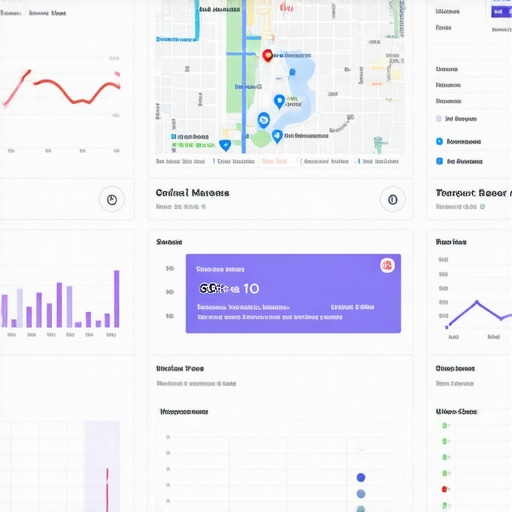 : “Close-up of a digital marketing dashboard showing local SEO metrics for Omaha businesses, with focus on map rankings and review scores.”
{
What I Wish I Knew About Omaha Map Rankings Early On
One of the most eye-opening lessons I learned was that your Omaha service area’s disappearance from Google Maps isn’t just about reviews or keywords—it’s deeply tied to authentic local signals and community engagement. Realizing that Google now prioritizes genuine neighborhood connections over manipulative tactics changed my entire approach. I also discovered that AI-driven algorithms are highly skilled at detecting inauthentic activity, which means spammy link-building or fake reviews can backfire spectacularly. Lastly, the importance of continuous monitoring and adapting your local SEO strategy became crystal clear—what worked in 2022 won’t cut it in 2026. Embracing authenticity, community involvement, and ongoing optimization is the key to staying visible in Omaha’s ever-evolving Google Maps landscape.
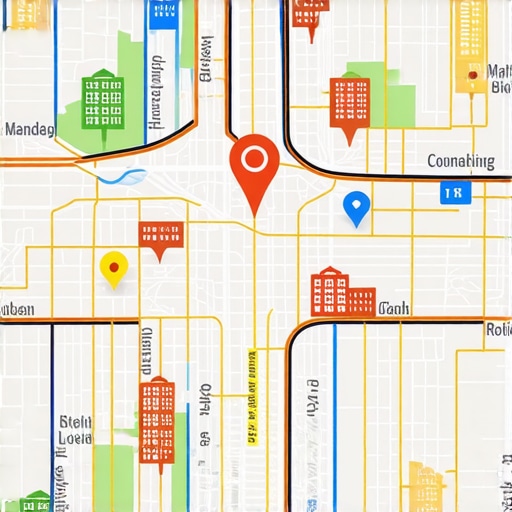
 Many Omaha entrepreneurs believe that simply claiming their Google My Business listing guarantees top local rankings, but in reality, this is a misconception rooted in outdated tactics. While owning your profile is essential, relying solely on basic optimization without understanding the nuanced algorithm signals is a surefire way to stagnate or fall behind competitors. For example, neglecting to update your profile with fresh media or ignoring the importance of neighborhood relevance can be detrimental, as recent studies highlight the impact of visual and local signals on 2026’s map pack rankings. Don’t fall into the trap of thinking visibility is a set-and-forget process; instead, focus on proactive strategies that align with Google’s evolving criteria.

 Many seasoned Omaha business owners assume that boosting their Google Maps ranking boils down to mere keyword stuffing or superficial profile updates. However, this simplistic view overlooks several nuanced factors critical to sustained success. One popular myth is that Google prioritizes keyword density over authentic user engagement; in reality, recent studies highlight that signals like local proof and review quality play a far more pivotal role in ranking algorithms. Relying solely on generic tactics risks falling victim to Google’s evolving focus on genuine local relevance, as detailed in expert analyses on local proof requirements for 2026. Another misconception is that once your Omaha GMB profile is optimized, rankings will automatically improve—this overlooks the importance of ongoing signal management, such as monitoring for spam reviews and maintaining citation consistency. Ignoring these details can lead to sudden drops in visibility, especially with Google’s frequent updates, like the recent changes seen in Omaha’s local search landscape. Advanced practitioners recognize that success depends on a holistic approach: aligning profile signals, leveraging local backlinks, and managing user-generated content proactively. For example, optimizing for proximity alone won’t win in Omaha’s competitive market if your local proof is weak or inconsistent. It’s essential to understand how Google’s algorithm evaluates real-world trustworthiness, which means investing in reputation management, local community engagement, and accurate citation building. This comprehensive strategy counters the common pitfall of focusing only on surface-level SEO tricks. How can you ensure your approach is future-proof? The key lies in staying updated on algorithm shifts and refining your tactics accordingly, as suggested by industry leaders who emphasize signal richness over superficial optimization. Do not fall into the trap of assuming that shortcuts lead to lasting visibility. Instead, dedicate resources to authentic local engagement, detailed profile management, and continuous monitoring. For a deeper dive into these advanced nuances, check out this guide on Omaha map rank stabilization and learn how to adapt your local strategy for 2026 and beyond. Have you ever fallen into this trap? Let me know in the comments.Maintaining your Omaha local SEO and GMB optimization efforts requires the right tools and a disciplined approach. I personally rely on specialized software like BrightLocal and Whitespark for citation audits and local rank tracking because they provide granular insights into citation consistency and map rankings over time. These tools help me identify fluctuations caused by algorithm updates, such as the recent Omaha-specific Google Maps changes, and adjust my strategies accordingly. Implementing a regular schedule for profile audits—checking for duplicate listings, outdated information, or review spam—is crucial. Using dashboard alerts from tools like Moz Local can streamline this process, ensuring you catch issues early before they impact your rankings. Additionally, keeping an eye on your reviews is vital; I recommend review management platforms like GatherUp, which aggregate reviews and notify you of new feedback, making it easier to respond promptly and bolster your local proof. Looking ahead, I predict that AI-powered reputation monitoring will become more sophisticated, offering predictive analytics to preempt ranking drops associated with review fluctuations or spam detection. To stay ahead, integrate these tools into your routine and set automated alerts for critical profile signals. Want to simplify this process? Start by automation: set up regular citation audits with Whitespark and review prompts with GatherUp. Consistency and proactive management of your GMB signals will ensure your Omaha business maintains its visibility advantage, even amidst ongoing algorithm updates. For a deeper dive into managing signals effectively, check out our detailed guide on [why your Omaha map pin is shadowbanned and how to fix it](https://omahalocalseo.com/why-your-omaha-map-pin-is-shadowbanned-3-fixes-for-2026). Remember, leveraging the right tools is only half the battle—combining them with strategic ongoing efforts will secure your long-term success.

 >
>